


So, you’ve got yourself an e-bike and you’re excited to take it out for a spin. But have you ever wondered how terrain and weight impact e-bike performance?
Well, buckle up because in this article, we’re going to explore the fascinating world of e-bike performance and how factors like terrain and weight can make all the difference.
Whether you’re cruising up a steep hill or navigating through a bumpy off-road trail, understanding the impact of these variables will help you make the most out of your e-bike experience.
Get ready to discover the secrets behind optimizing your e-bike’s performance and conquering any ride with ease.
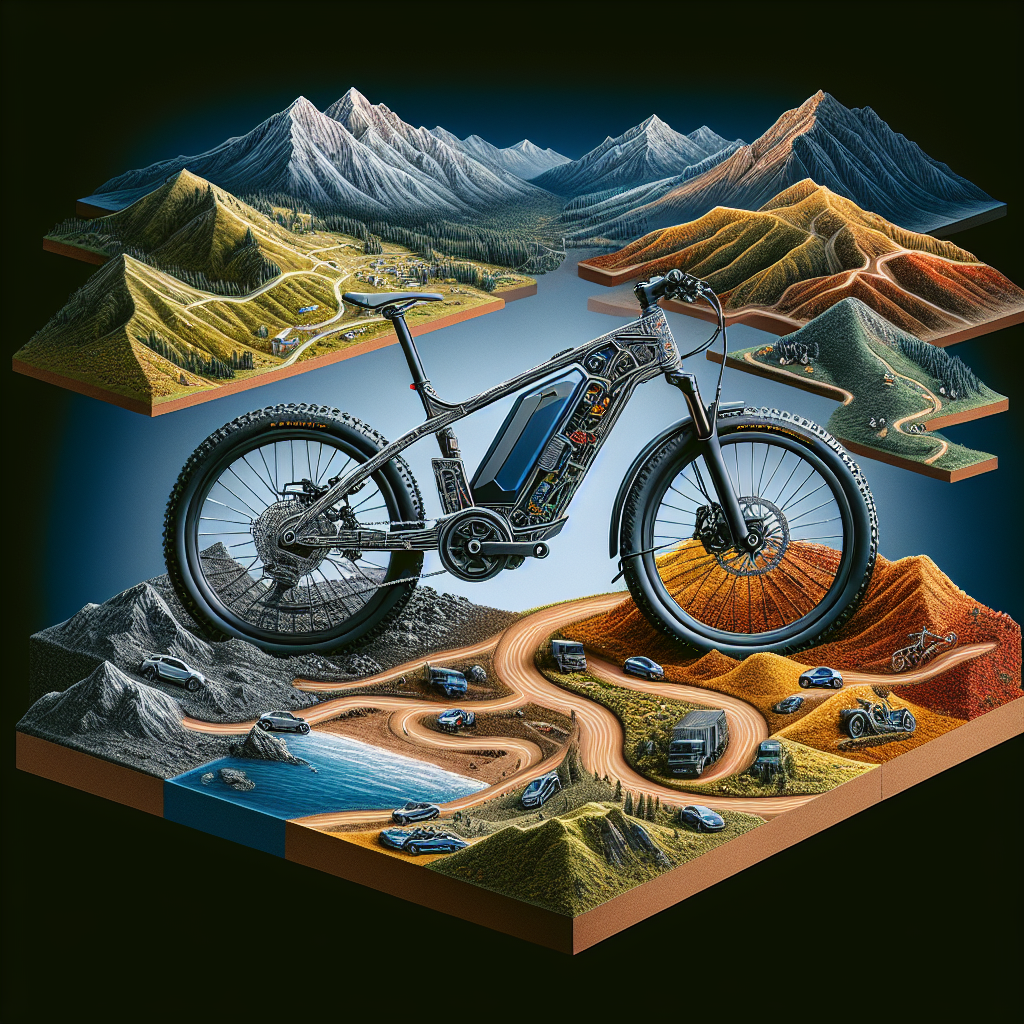
Effects of Terrain on E-Bike Performance
Impact of Uphill Terrain
When riding an e-bike, uphill terrain can have a significant impact on performance. As you pedal uphill, the motor of the e-bike needs to work harder to provide the necessary power to overcome the gravitational pull.
This increased workload on the motor can drain the battery more quickly, reducing the overall range of the e-bike.
Additionally, the steepness of the uphill terrain can affect the speed and ease with which you can ascend.
Riding uphill requires more effort and can be challenging, especially if the motor power and torque are not optimized for uphill riding.
Impact of Downhill Terrain
While downhill terrain may seem like an easy ride, it also affects e-bike performance. When riding downhill, the motor does not need to work as hard, resulting in less battery consumption.
However, it is essential to maintain control and stability while descending, as excessive speed can be dangerous.
The weight distribution on the e-bike can also impact downhill performance. A well-balanced e-bike with an optimal weight distribution can provide better handling and control when riding downhill.
Effects of Uneven Terrain
Uneven terrain, such as rough roads or off-road trails, can greatly impact e-bike performance.
Riding on uneven surfaces can cause the e-bike to experience more vibrations and shocks, leading to a less comfortable ride. It can also affect the handling of the e-bike, making it more challenging to maintain stability.
In such conditions, having a suspension system can greatly improve the overall performance, as it helps absorb the shocks and impacts from uneven terrain, improving both comfort and control.
Influence of Road Conditions
Road conditions, whether smooth or rough, paved or unpaved, can significantly influence e-bike performance.
On smooth roads, you can expect a smoother and more comfortable ride, allowing you to maintain a higher average speed.
However, on rough or unpaved roads, the e-bike may experience more resistance, leading to a decrease in speed and overall performance.
The tire tread and pressure can also play a role in handling various road conditions. For example, wider tires with lower pressure can provide better traction on unpaved roads, whereas thinner tires with higher pressure can be more beneficial on smooth, paved surfaces.
Role of Weight in E-Bike Performance
Weight and Acceleration
The weight of the e-bike and its rider can impact acceleration. A lighter e-bike, combined with a lighter rider, can have a quicker initial acceleration.
This can be particularly advantageous when starting from a complete stop or navigating through traffic.
On the other hand, a heavier e-bike may require more effort to reach higher speeds, resulting in a slower acceleration.
It is worth noting that e-bikes with a higher motor power can compensate for increased weight and provide a better acceleration experience.
Weight and Battery Consumption
Weight also plays a role in e-bike battery consumption. The heavier the e-bike and the rider, the more power the motor needs to exert to maintain a constant speed, resulting in increased battery usage.
This can reduce the overall range of the e-bike, as more frequent recharging may be required. Therefore, it is essential to consider the weight of the e-bike and its rider when planning longer rides or when battery life is a critical factor.
Weight and Range
The weight of an e-bike can impact its overall range. A lighter e-bike requires less power to maintain a certain speed, allowing the battery to last longer.
Conversely, a heavier e-bike will consume more battery power, reducing the distance that can be covered on a single charge.
For riders who prioritize longer rides or need to travel greater distances, keeping the weight of the e-bike as low as possible becomes crucial for optimizing range.
Weight and Handling
The weight of an e-bike can impact its handling, particularly during turns and maneuvers. A heavier e-bike may feel less agile and require more effort to navigate tight corners or sudden changes in direction.
On the other hand, a lighter e-bike can provide better maneuverability, making it easier to handle in various riding situations.
It is important to find a balance between weight and handling, taking into account personal preferences and the intended use of the e-bike.
Factors Influencing Terrain Impact
Motor Power and Torque
The motor power and torque of an e-bike are crucial factors in determining its performance on different terrains.
A more powerful motor and higher torque can provide the necessary strength to conquer uphill sections with ease.
Conversely, a weaker motor or lower torque may struggle on steep inclines, requiring more physical effort from the rider.
When choosing an e-bike, it is important to consider your typical riding terrain and ensure that the motor power and torque are suitable for the demands you will encounter.
You may also be interested in Picking The Right E-Bike Size And Fit
Gear Ratio and Cadence
The gear ratio and cadence also play significant roles in how e-bikes perform on different terrains. Different gear ratios allow riders to adjust their pedaling efforts to match the terrain.
Lower gear ratios are beneficial for climbing uphill, as they provide more power with less pedaling effort.
Higher gear ratios, on the other hand, are ideal for maintaining speed on flat terrain or descending.
Finding the right gear ratio for each terrain can significantly improve the overall performance and efficiency of the e-bike.
Suspension Systems
The presence of a suspension system on an e-bike can greatly impact its performance on various terrains.
Suspension systems absorb impacts from uneven terrain, providing a more comfortable ride by reducing vibrations and shocks. This enhances the e-bike’s ability to maintain stability and control even on rough surfaces.
Suspension systems can be found on the front fork or incorporated into the frame design. It is important to consider the type and quality of the suspension system when choosing an e-bike, as it can greatly influence your riding experience.
Tire Tread and Pressure
The tire tread and pressure are critical factors in determining how an e-bike performs on different terrains.
The tread pattern affects the grip and traction of the tires, with different patterns offering varying levels of traction on different surfaces.
For example, knobby tires with aggressive tread patterns are better suited for off-road riding, providing excellent traction on loose or muddy trails.
On the other hand, slick or semi-slick tires with minimal tread are ideal for smooth pavement, offering reduced rolling resistance and increased efficiency.
Additionally, maintaining the correct tire pressure is crucial for optimal performance, as both underinflated and overinflated tires can negatively impact handling and comfort.
Factors Influencing Weight Impact
Battery Capacity
The capacity of the e-bike’s battery affects both the weight and overall performance.
Generally, higher capacity batteries provide a longer riding range, allowing you to cover greater distances before needing to recharge.
However, higher capacity batteries also tend to be heavier, adding to the overall weight of the e-bike.
When considering battery capacity, it is essential to find a balance between range and weight, depending on your riding needs and preferences.
Frame Design and Material
The design and material of the e-bike’s frame can significantly impact its weight and overall performance.
Different frame materials, such as aluminum or carbon fiber, offer varying levels of strength and weight.
Lighter frame materials can contribute to a more agile and responsive e-bike, whereas heavier materials can affect handling and maneuverability.
The frame design also plays a role in weight distribution, with well-designed frames providing better balance and stability.
Motor Efficiency
Efficiency is a key factor when it comes to the impact of weight on e-bike performance. A more efficient motor can compensate for the additional weight and provide a smoother and more powerful ride.
High-efficiency motors convert a larger percentage of the energy from the battery into forward motion, reducing energy wastage and maximizing the e-bike’s potential performance.
Rider’s Physical Fitness
The physical fitness of the rider can influence the impact of weight on e-bike performance.
A fitter and stronger rider may be less affected by the additional weight, allowing them to maintain higher speeds and better handling.
On the other hand, a less fit or inexperienced rider may find it more challenging to handle a heavier e-bike and may experience a decrease in performance as a result.
Regular physical exercise and training can help improve overall fitness, making it easier to handle the weight of an e-bike.
Strategies to Optimize E-Bike Performance
Choosing the Right Gear Ratio
Selecting the appropriate gear ratio based on the terrain can significantly optimize e-bike performance.
Lower gear ratios make it easier to climb steep hills, while higher gear ratios are better for flat terrain and descending.
Experimenting with different gear combinations can help you find the optimal setup for various riding conditions, ensuring that you’re using your energy efficiently and maximizing the e-bike’s capabilities.
Check out this article from our friends at VelotricBike: Beginner’s Guide to Electric Bicycle Gears
Maintaining Proper Tire Pressure
Regularly checking and maintaining the correct tire pressure is essential for optimal e-bike performance.
Underinflated tires can increase rolling resistance, requiring more effort from the rider and ultimately decreasing efficiency. Overinflated tires may result in reduced traction and a harsh ride.
Following the manufacturer’s recommended tire pressure guidelines for your specific e-bike model can ensure that you’re getting the most out of your tires and improving overall performance.
Optimizing Suspension Settings
If your e-bike is equipped with a suspension system, adjusting and optimizing the suspension settings can significantly enhance performance.
The suspension settings can be adjusted according to your weight, riding style, and the terrain you typically encounter.
Finding the right balance between comfort and control can greatly improve the e-bike’s handling and overall riding experience.
Using Pedal Assist Modes Wisely
Modern e-bikes often offer multiple pedal-assist modes, allowing riders to adjust the level of motor assistance.
Understanding the characteristics of each mode and using them wisely based on the terrain and your own physical capabilities can optimize e-bike performance.
For example, using a higher-assist mode on steep uphill sections can help overcome the added resistance, while using a lower-assist mode on flat or downhill terrain can conserve battery power and extend your riding range.
How Terrain and Weight Impact E-Bike Performance – Conclusion
The effects of terrain and weight on e-bike performance are undeniable. Uphill terrain poses challenges when it comes to motor power and battery consumption, while downhill terrain requires control and stability.
Uneven terrain and road conditions influence comfort, handling, and overall ride quality. Weight impacts factors such as acceleration, battery consumption, range, and handling.
Understanding these influences and considering factors like motor power, gear ratio, suspension systems, and tire tread can optimize e-bike performance.
Additionally, battery capacity, frame design and material, motor efficiency, and the rider’s physical fitness all play crucial roles in the impact of weight.
By implementing strategies like choosing the right gear ratio, maintaining proper tire pressure, optimizing suspension settings, and using pedal-assist modes wisely, e-bike performance can be maximized.
Overall, a thoughtful consideration of terrain and weight factors, along with the implementation of optimization strategies, can greatly enhance the performance and enjoyment of riding an e-bike.